

Jyotish Dev brings authentic, human astrologers-analyzed Vedic astrology from Bhubaneswar to the world. We decode your Kundali to provide profound life clarity globally.
Last updated: September 5, 2026
Lighting a diya, or oil lamp, in a Hindu home is more than a simple act; it’s a profound daily ritual that symbolizes knowledge over ignorance, purity, and the presence of divine energy. For homeowners and devotees seeking to integrate this practice effectively, understanding the optimal timing and specific directions for diya lighting is crucial. This guide explains the best practices for lighting a diya at home, focusing on commonly followed household customs and Vastu Shastra principles to maximize positive vibrations and spiritual benefits.
Key Takeaways
- Morning Diya: The best time to light a diya in the morning is around sunrise, ideally after bathing and cleaning the puja area.
- Evening Diya: Light the evening diya around sunset, during the sacred Sandhya time, to welcome positive energy as day transitions to night.
- Optimal Directions: For most intentions, the diya flame should face East (for knowledge, new beginnings), North (for prosperity), or Northeast (for spiritual activities).
- Avoid South: It is widely advised to avoid placing the diya flame facing South, due to traditional associations with heavier energies.
- Placement Matters: Place diyas in clean, stable, and fire-safe locations, primarily in the puja room, near the Tulsi plant, or at the main entrance.
- Ghee vs. Oil: Ghee diyas are traditional for daily puja and deity worship, while sesame or mustard oil diyas are common for specific devotional practices or regional traditions.
- Consistency is Key: Regularity in timing and practice is more significant than strict adherence to exact minutes, fostering spiritual discipline.
- Safety First: Always prioritize fire safety, ensuring diyas are away from flammable materials and never left unattended, especially if burning overnight (Akhand Diya).
Why Is Lighting a Diya at Home Considered Auspicious?
Lighting a diya at home is considered auspicious because it represents a deep spiritual and symbolic act, inviting positivity and divine blessings into the living space. The flame acts as a conduit for various energies, purifying the environment and fostering a sense of peace and devotion.
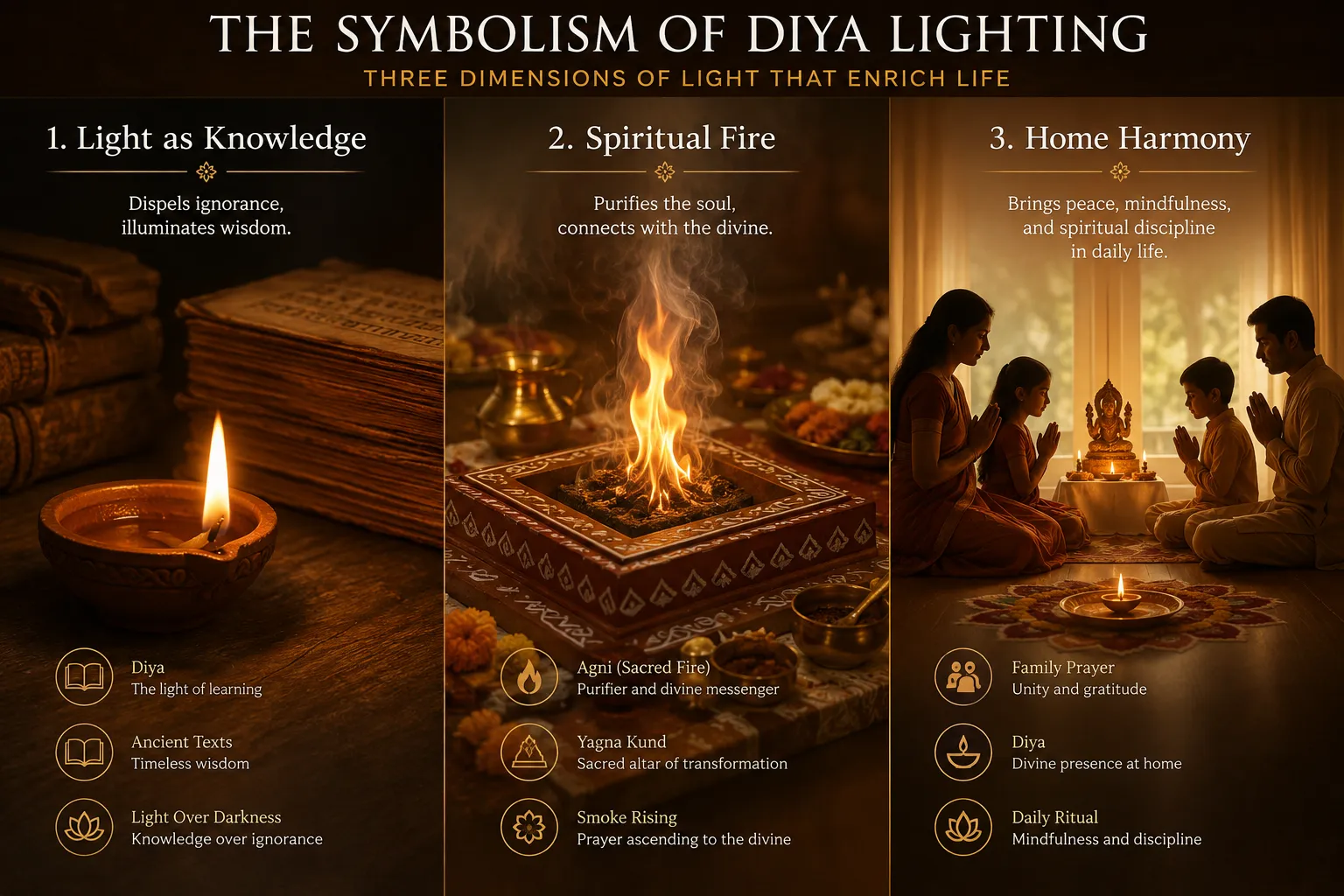
The tradition of daily diya lighting creates a regular moment for prayer, mindfulness, and spiritual discipline. It transforms the home into a sanctuary, reminding residents of their connection to the divine.
Light as a Symbol of Knowledge
The diya symbolizes the journey from darkness and ignorance towards awareness and wisdom. Just as a single flame can dispel gloom, it represents the inner light of understanding and the dispelling of illusion (Maya). This transition from unlit to lit signifies spiritual awakening and enlightenment in Hindu traditions.
The Spiritual Meaning of Fire
Agni, the fire deity, holds an important place in Hindu ritual traditions. Fire is traditionally associated with purification, transformation, and divine offering. Lighting a diya invokes Agni, signifying the offering of one’s intentions and prayers to the divine, acting as a messenger between mortals and gods. The burning flame is believed to purify the surroundings and ward off negative energies.
What Time Should I Light a Diya in the Morning?
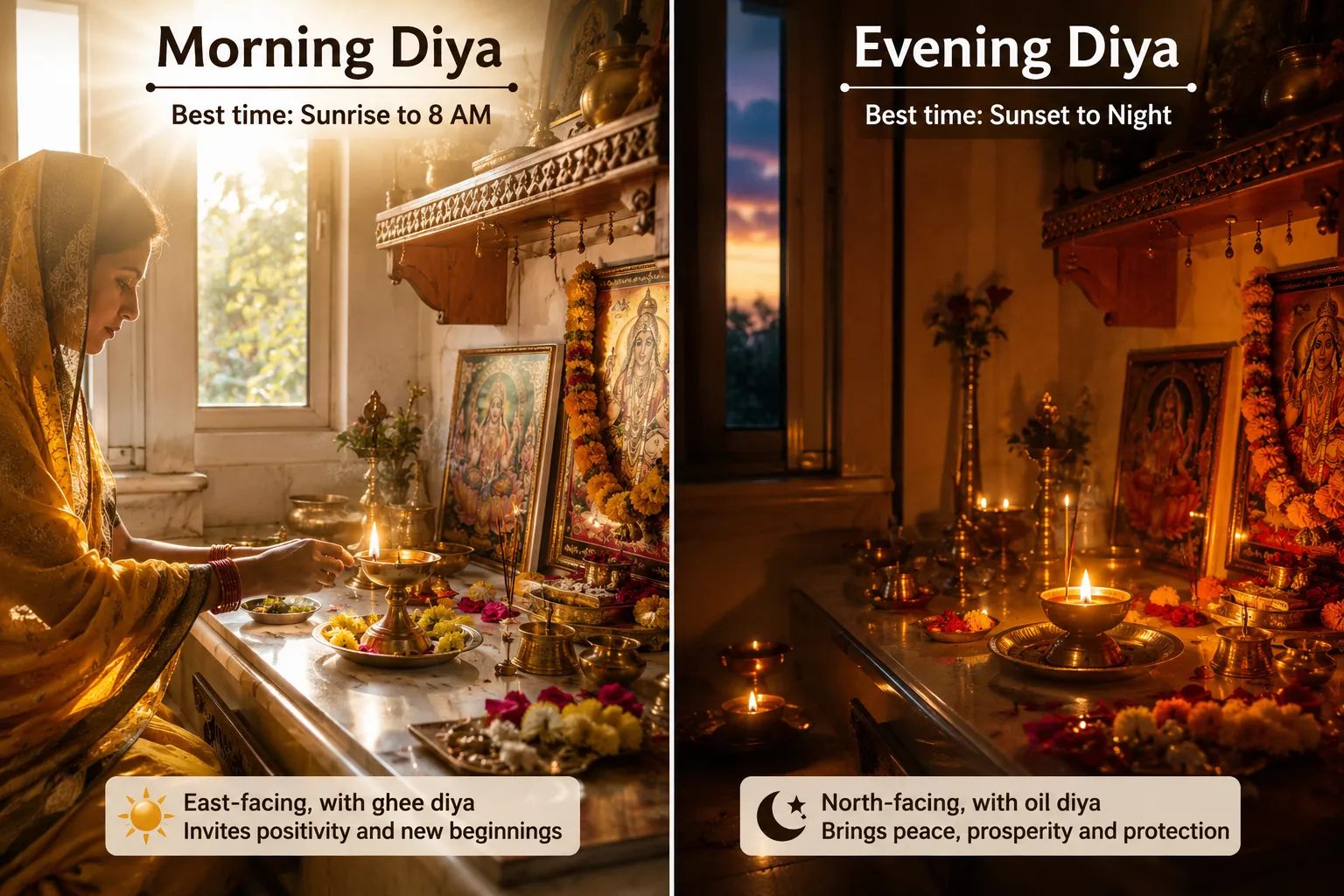
The most auspicious time to light a diya in the morning is around sunrise, during your daily puja. This timing aligns with the rising sun, symbolizing new beginnings and the influx of positive energy into the home.
While an exact universal clock time is not practical due to seasonal and geographical variations, aiming for the period just after sunrise is ideal. This is often part of a suggested sequence: bathe, clean the puja area, light the diya, offer prayers or mantras, and then proceed with other morning rituals.
Which Direction Should the Morning Diya Face?
For morning diya lighting, the flame traditionally faces East. The East is symbolically associated with the rising sun, which brings light, knowledge, and new beginnings. Facing the diya towards the East is believed to enhance spiritual awareness and invite positive energies into the home. This direction is particularly beneficial for those seeking clarity and intellectual growth.
Best Time to Light a Diya in Evening
The best time to light a diya in the evening is around sunset, during the sacred Sandhya time. This transition period from day to night is considered highly potent for spiritual practices and invites positive energy to counteract any negative influences as dusk settles [5].
For example, if sunset occurs locally at 6:15 PM, lighting the diya within a few minutes before or after this time is appropriate. The focus should be on regularity and observing this auspicious twilight period consistently, rather than adhering to a rigid minute. Some Vastu guides recommend lighting it approximately five minutes before sunset [11].
Which Direction Should a Diya Face?
The direction a diya faces is crucial in Vastu Shastra, influencing the flow of energy in your home. The flame’s orientation can enhance specific types of blessings and positive vibrations, making this a central aspect of daily diya rituals.
East-Facing Diya
An East-facing diya is traditionally associated with knowledge, spiritual awareness, and positive beginnings. It welcomes the energy of the rising sun, fostering enlightenment and progress [1]. Many devotees prefer this direction for daily worship and intellectual pursuits.
North-Facing Diya
A North-facing diya is traditionally associated with prosperity, opportunities, and abundance. Lighting a diya towards the North is believed to attract wealth and new ventures, making it a popular choice for those seeking financial stability and growth.
Northeast / Ishana
The Northeast direction, also known as Ishana Kon, is often regarded in Vastu traditions as the most auspicious zone for spiritual activities and puja. Placing a diya here and having its flame face either East or North is considered highly beneficial for overall spiritual well-being and positive energy [10].
Important Clarification: Placement vs. Flame Direction
It is important to differentiate between where the diya is placed and which direction the flame faces. The placement refers to the location of the diya itself (e.g., in the puja room, near Tulsi), while the flame direction refers to the orientation of the wick and the light it casts. While a diya may be placed in the northeast corner, its flame could still be oriented towards the East or North for specific benefits.
What Is the Best Direction a Diya Should Face According to Vastu Shastra?
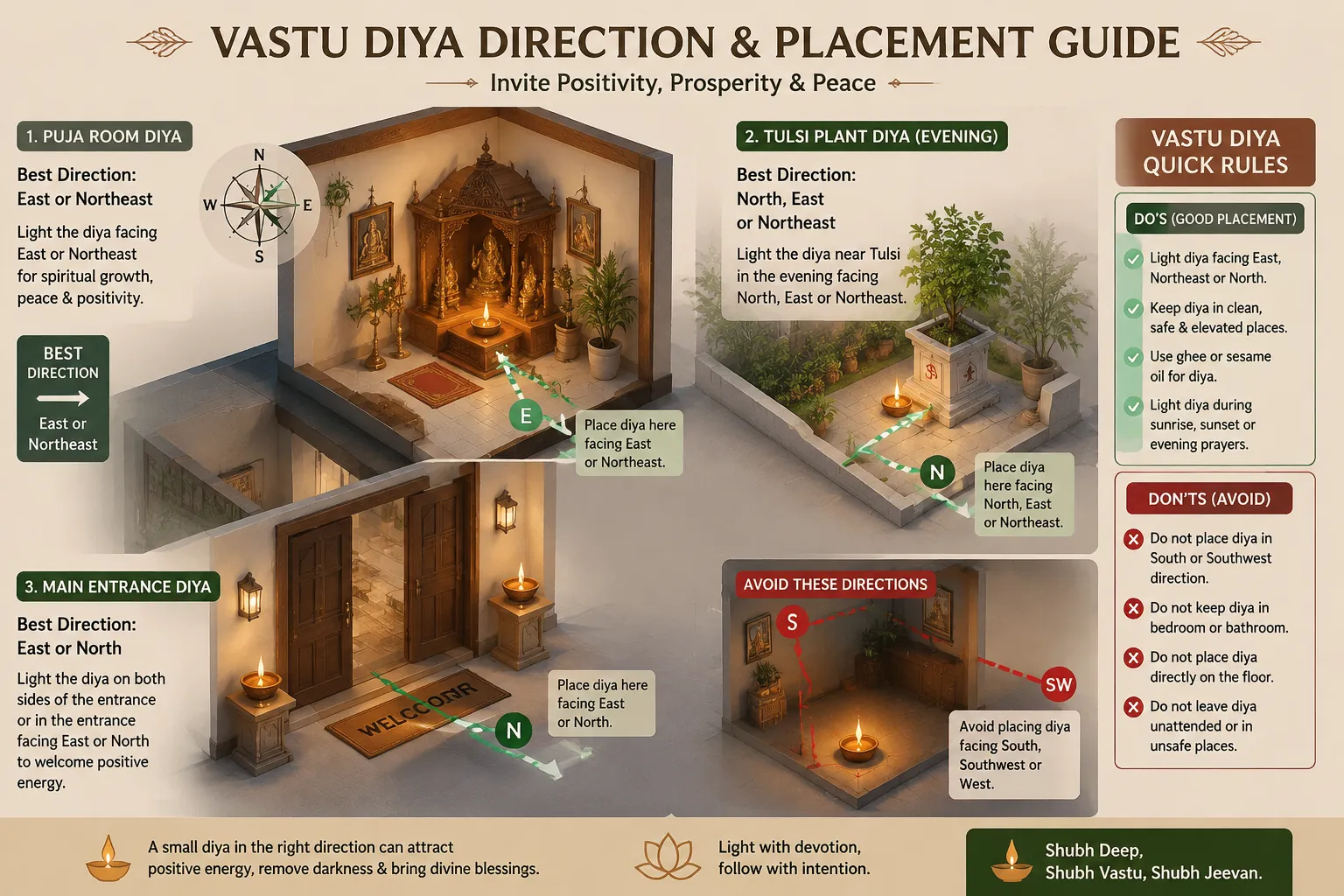
According to Vastu Shastra, the best direction for a diya to face is generally East or North, with Northeast (Ishana Kon) also being highly auspicious for spiritual practices [10, 15]. The South direction is consistently advised against for the diya flame [3].
| Intention | Traditional Direction | Benefits |
|---|---|---|
| Daily Worship | East / North / Northeast | Overall well-being, spiritual growth, positive energy |
| Knowledge/Study | East | Enhanced learning, clarity, new beginnings |
| Prosperity | North | Financial gain, new opportunities, abundance |
| Spiritual Peace | Northeast / East | Inner calm, divine connection, purity |
| Evening Prayer | East or North | Protection, harmony, warding off negative influences during transition |
| Tulsi Worship | Near Tulsi, East/North-facing | Inviting Lakshmi, health, and prosperity |
Disclaimer: These are traditional Vastu/religious associations, not scientifically established guarantees of specific outcomes.
Can I Light a Diya in Any Room or Does It Need to Be Puja Room?
While the puja room is the primary and most sacred location for diya lighting, you can light diyas in other areas of your home, such as near the Tulsi plant or at the main entrance, to invite positive energy. However, certain areas like bathrooms, bedrooms, and staircases are generally to be avoided for diya placement according to Vastu principles [13].
The first diya of the day, or for a special festival, should ideally be lit in the puja room to establish a sacred core for your home [9]. Subsequently, diyas can be placed in other auspicious zones.
What’s the Difference Between Ghee Diya and Oil Diya for Daily Use?
The primary difference between ghee diya and oil diya lies in their traditional significance, symbolism, and the type of energy they are believed to invoke. Both are integral to daily Hindu rituals, but specific traditions often prefer one over the other for particular deities or intentions.
Ghee Diya
A ghee diya, using clarified butter, is highly revered in Hindu traditions. It is typically considered purer and is common for:
- Daily Puja: Essential for most daily deity worship and rituals.
- Aarti: Often used during Aarti, symbolizing supreme devotion.
- Special Religious Occasions: Preferred for festivals and auspicious ceremonies.
Ghee is believed to attract positive vibrations and is associated with prosperity and purity. A ghee diya, especially one lit in the Northeast for about 11 minutes daily, is believed to invoke Lakshmi’s blessings [11].
Oil Diya
Oil diyas utilize various types of oils, each with its own significance:
- Sesame Oil Diya (Til Tel): Important in several Hindu devotional traditions, particularly for certain forms of Shani (Saturn) worship, believed to alleviate malefic effects.
- Mustard Oil Diya (Sarson Tel): Used in specific regional and deity-related traditions, often associated with protection and overcoming obstacles.
It’s important to note that no single fuel is universally mandatory for every Hindu household. The choice often depends on family traditions, regional customs, and specific deity worship practices.
How Long Should Diya Stay Lit Each Day?
For ordinary daily puja, it is not necessary for a diya to stay lit all night. The primary purpose is to establish a period of devotion and positive energy during the morning and evening rituals. Most diyas are allowed to burn out naturally after the puja or after some time, typically at least 15-30 minutes, or longer if desired for the ambiance.
What About an Akhand Diya?
An Akhand Diya (uninterrupted lamp) is a separate devotional practice where a diya is kept burning continuously for a specific period (e.g., during a festival, a multi-day puja, or for specific vows). This requires much greater attention to fire safety, including a constant supply of fuel and supervision. For daily household practice, an Akhand Diya is usually not expected or practical. Never leave an open flame unattended.
What Happens If You Light Diya at Wrong Time?
Lighting a diya at a “wrong” time, while generally discouraged, is primarily seen as missing an opportunity for enhanced spiritual benefit rather than inviting severe negative consequences. Traditional Vastu guides emphasize the auspiciousness of sunrise and sunset for diya lighting [13, 14].
If a diya goes out or is lit at an unconventional time, it’s advised to relight it calmly and with pure intention rather than dwelling on it as a bad omen. The focus should always be on the sincerity of the devotion.
Can I Light Diya for Tulsi Plant Every Day?
Yes, lighting a diya near the Tulsi plant every evening is a common and cherished tradition in many Hindu households. Tulsi (holy basil) is a sacred plant, strongly associated with Goddess Lakshmi and Lord Vishnu, and is believed to invite prosperity and divine grace [9, 12].
This practice is part of the evening worship, often performed around sunset, reinforcing the spiritual sanctity of the home. When lighting a Tulsi diya:
- Keep the flame at a safe distance from the plant to prevent accidental burns.
- Avoid direct contact with the leaves.
- Use a stable diya holder to prevent it from toppling.
Is a Tulsi Diya Mandatory Every Day?
While lighting a diya near Tulsi every evening is a beautiful and recommended practice, it is a traditional custom rather than a universal religious obligation. Many families do it regularly, while others may do so on specific days or during festivals. Consistency in your chosen practice is key.
Should You Light a Diya at the Main Entrance?
Yes, lighting a diya at the main entrance is a traditional practice that symbolizes welcome, auspiciousness, and the threshold between the outside world and the sacred space of the home. It is believed to ward off negative energies and invite blessings and good fortune into the household [9, 12].
If you follow this custom, remember these safety guidelines:
- Keep the diya away from the walking path to prevent accidental knocking.
- Use a stable surface that is heat-resistant.
- Keep it away from curtains, door mats, or any other combustible materials.
- Never compromise safety for ritual placement. Ensure the diya is protected from strong winds or drafts.
Places Where You Should Not Keep a Diya
For both safety and Vastu reasons, certain places in the home should be avoided for diya placement. Adhering to these guidelines enhances the positive effects and prevents potential hazards:
- Near Curtains or Drape: Highly flammable materials can easily catch fire.
- Under or Directly Beside a Fan: Strong airflow can extinguish the flame or cause it to spread, increasing fire risk.
- Near Paper, Dry Flowers, or Other Combustible Decorations: These materials are fire hazards.
- On an Unstable Surface: Prevents accidental spills of oil/ghee or the diya falling over.
- Within Easy Reach of Children or Pets: Essential for preventing burns or accidents.
- In Bathrooms, Bedrooms, or Near Toilets: According to Vastu, these areas are considered less pure for sacred objects like diyas [13, 15].
- In Staircases: Avoid placing diyas on stairs to prevent tripping hazards or them being knocked over.
Prioritizing safety ensures that the act of lighting a diya remains a source of peace and blessings, not worry.
What Does It Mean If the Diya Goes Out?
If a diya goes out, it is primarily due to practical reasons, not automatically a bad omen. Many people fear that an extinguished diya signifies negativity, but this is usually an unfounded concern.
Common reasons a diya goes out include:
- Strong Airflow: Drafts from windows, doors, or fans.
- Insufficient Oil or Ghee: The fuel simply runs out.
- Wick Problems: A poorly placed or used wick, or one that has burned down.
- Moisture: Water near the wick or fuel.
- Poor Placement: An unstable surface causing movement.
Instead of interpreting it as a bad omen, it’s advisable to check for a practical reason first and calmly relight it if appropriate, renewing your intention. Some Vastu traditions even suggest lighting a fresh diya in the evening rather than simply relighting a morning one that went out, to prevent “poverty-bringing” doshas [13, 14].
Simple Daily Diya Ritual at Home
Establishing a consistent daily diya ritual at home fosters spiritual discipline and invites positive energy. Here’s a simple routine you can follow:
Morning
- Clean the Puja Area: Ensure the space around your deities and diya is clean and tidy.
- Clean the Diya: Wash and dry the diya if needed.
- Add Ghee or Suitable Oil: Fill the diya with your preferred fuel.
- Place the Wick: Position a fresh cotton wick in the diya.
- Light the Diya: Light it around sunrise, preferably with the flame facing East.
- Offer a Short Prayer: Recite a mantra or simply offer a silent prayer.
- Sit Quietly: Spend a few moments in silence, meditating on the flame.
Evening
- Clean the Puja Area: Quickly tidy up the puja space.
- Light the Diya: Ignite a fresh diya around sunset, with the flame facing East or North.
- Perform a Short Prayer or Aarti: Offer evening prayers or perform a simple Aarti.
- Light a Tulsi Diya (Optional): If part of your family tradition, light a diya near the Tulsi plant.
- Spend a Few Moments in Silence: Reflect on the day and offer gratitude.
A Simple Prayer While Lighting the Diya
A meaningful prayer enhances the spiritual impact of lighting a diya. A commonly recited prayer is:
“Shubham Karoti Kalyanam Arogyam Dhana Sampada Shatru Buddhi Vinashaya Deepa Jyotir Namostute.”
Meaning:
This prayer seeks auspiciousness, well-being, health, prosperity, and the removal of negative tendencies or ill will. It is an invocation to the light of the lamp to bring all good things into one’s life.
7 Common Mistakes to Avoid
To ensure your daily diya ritual is effective and safe, avoid these common mistakes:
- Focusing only on direction while ignoring cleanliness: A clean diya and puja area are as important as correct direction.
- Keeping the diya in an unsafe location: Placing it near flammable materials or in an unstable position.
- Treating every extinguished flame as an omen: Most often, it’s a practical issue like a draft or lack of fuel.
- Assuming one type of oil is compulsory for every puja: Different oils have different significance; choose based on tradition or intention.
- Leaving an open flame unattended: Especially for children or pets, this is a major fire hazard.
- Placing the diya too close to curtains or decorations: Always maintain a safe distance from combustible items.
- Turning traditional Vastu guidelines into fear-based superstition: Approach practices with devotion and understanding, not excessive fear.
Morning vs Evening Diya, Quick Reference
Understanding the nuances between morning and evening diya lighting can enhance your daily ritual.
| Feature | Morning | Evening |
|---|---|---|
| Best time | Around sunrise | Around sunset (Sandhya Kaal) |
| Main symbolism | Knowledge, awakening, new beginnings | Transition, prayer, protection |
| Preferred direction | East | East / North |
| Location | Puja room | Puja room / Tulsi |
| Common fuel | Ghee / suitable oil (sesame, mustard) | Ghee / suitable oil (sesame, mustard) |
Conclusion
The daily ritual of lighting a diya at home is a profound practice that goes beyond mere illumination. It is about creating a regular moment of light, prayer, discipline, and awareness within the home, enriching the spiritual environment. While Vastu directions offer traditional guidance, the sincerity of your intention and consistency in your practice hold paramount importance.
A practical routine involves lighting the diya around sunrise in the morning, preferably with the flame facing East. In the evening, light a fresh diya around sunset, with the flame facing East or North, depending on your household’s tradition and specific intentions. Always prioritize a clean, stable, and fire-safe location for your diya. Remember that Vastu directions are traditional beliefs intended to guide positive energy, rather than guaranteed mechanisms for wealth, health, or fortune.
The ultimate takeaway is that while a diya brings physical light to your home, its deeper purpose is to remind you, the person lighting it, to bring light into your own mind and heart, fostering peace and spiritual growth in 2026.
Related Reading
Jyotish Dev brings authentic, human astrologers-analyzed Vedic astrology from Bhubaneswar to the world. We decode your Kundali to provide profound life clarity globally.
